
Plain-English education, checklists, and step-by-step guidance so your family knows exactly what to do.
Choose your next step
Start Here (Free)
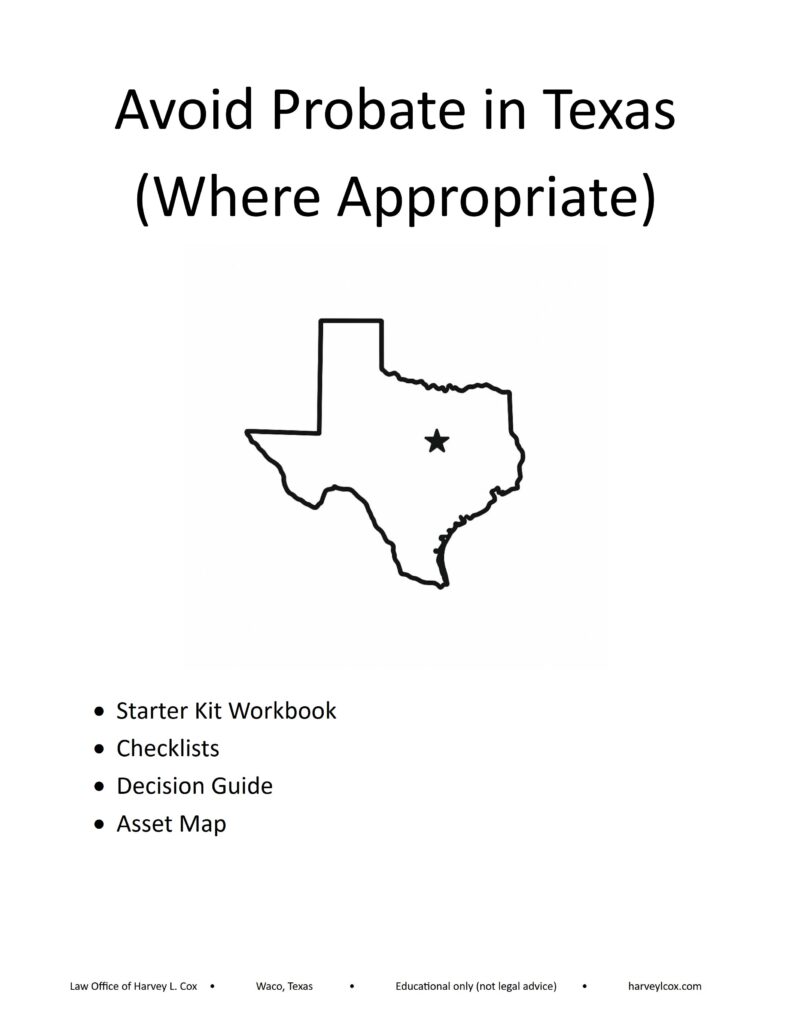
Avoid Probate in Texas Starter Kit (print-first workbook + checklists).
DIY Education (Paid)
Texas Probate Avoidance Blueprint: step-by-step course with checklists.
Need Legal Help (1:1)
Limited consults available. $50 refundable deposit to reserve your time.
What you get in the Starter Kit
A print-first workbook and checklists to help you reduce probate risk and get organized.
- Asset Map Worksheet — what you own + how it’s titled
- Probate-Risk Scorecard — identify your highest-risk assets
- Tool Comparison Guide — will vs trust vs TOD deed vs beneficiaries
- Next 30 Days Action Plan — the simplest order of operations
- Common Mistakes Checklist — what to avoid before it’s too late
One per household. Educational information only.
- Instant download (PDF)
- Print-first format
- One per household
- Made for Texas families
Why it matters
These are the four places families get surprised—usually when it’s too late to ‘fix it later.’
- Probate takes time—even when it’s “simple.”
- Beneficiary designations can override your documents.
- Unfunded trusts don’t work the way people think.
- Family conflict shows up at the worst time
The Starter Kit helps you spot these issues early.
FAQ
No. This Starter Kit is educational information to help you get organized and understand common probate-avoidance tools in Texas. For advice about your specific situation, you should talk with a qualified attorney.
Maybe, maybe not. Some families don’t. The Starter Kit helps you map your assets, spot probate-risk areas, and understand when a trust is worth exploring.
That’s common. The Starter Kit helps you review what you have, identify gaps, and make sure your accounts and beneficiary designations match your plan.
Most people can complete the Starter Kit in one sitting, then follow the “next 30 days” roadmap to prioritize what to do next.
It will help you identify red flags and the questions you need to ask. Those situations often require individualized legal guidance, so the Starter Kit is a starting point—not a substitute for counsel.