
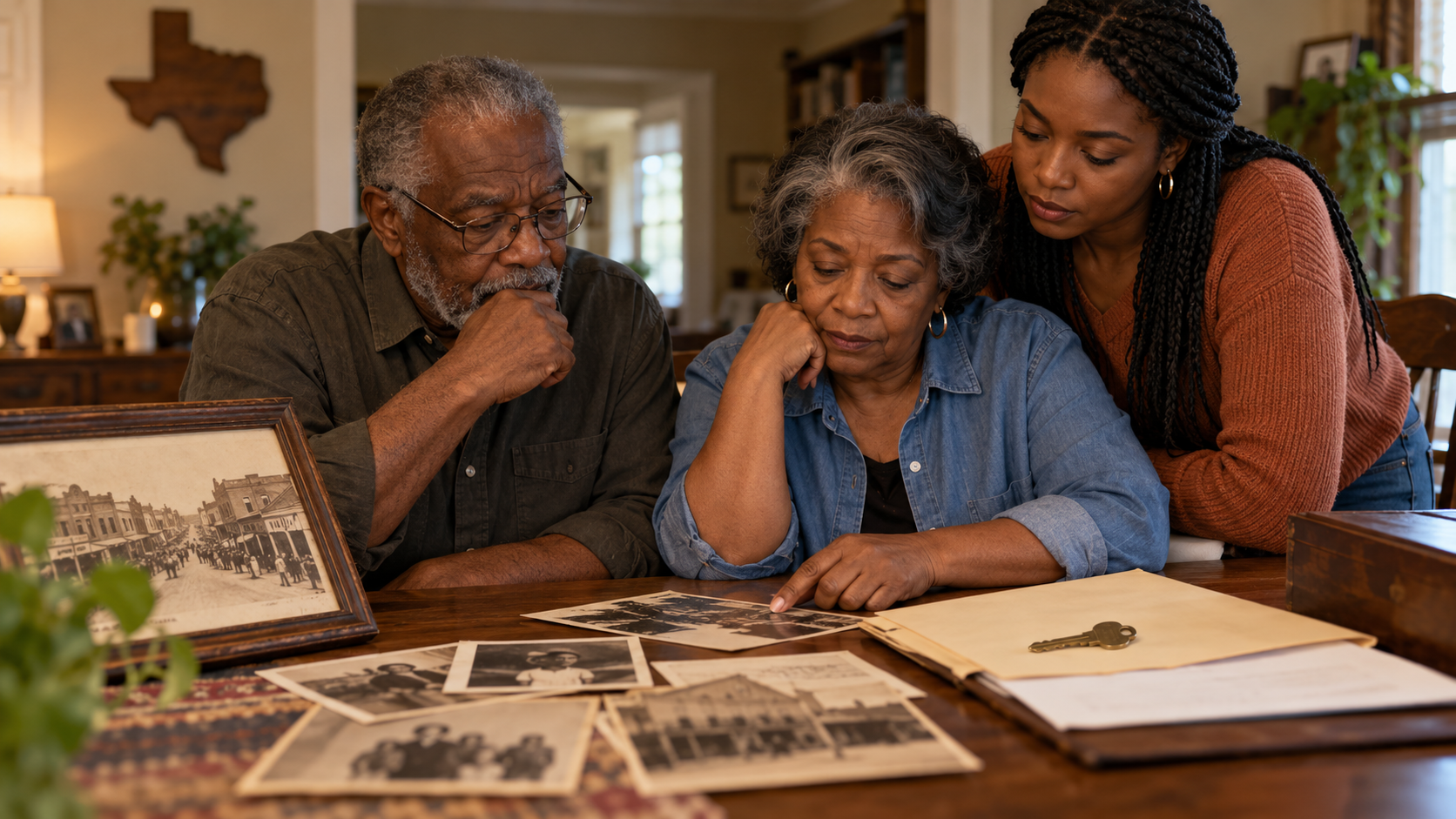
When most people think about estate planning, they think about wills, trusts, or avoiding probate. They usually do not think about what happens when the legal system itself fails ordinary families.
That is one reason Greenwood matters.
The Greenwood district of Tulsa, Oklahoma, was one of the most prosperous Black communities in America. Families built homes, businesses, churches, and professional practices there. Then, in 1921, racial violence destroyed much of that community. Beyond the physical destruction, what followed was another kind of failure: many families were left without meaningful legal protection, prompt justice, or fair restoration.
For families today, including families here in Texas, Greenwood is a reminder of a hard truth: law can be necessary, but law is not always enough. If your family’s property, business interests, decision-making authority, or records are unclear, the burden often falls on your loved ones at the worst possible time.
That is not a reason for fear. It is a reason for practical preparation.
What Greenwood Shows About Legal Vulnerability
The lesson of Greenwood is not simply that a tragedy happened. It is that families who had worked hard to build something valuable could still find themselves exposed when institutions failed to protect ownership, safety, and recovery.
A family may assume:
- “If something happens, the law will sort it out.”
- “Everyone knows what belongs to whom.”
- “My spouse or children can just step in.”
- “If records are needed, they can find them.”
In real life, those assumptions often break down.
Even in ordinary modern situations that have nothing to do with historic injustice, families can run into legal confusion after death, incapacity, remarriage, or a sudden crisis. The law may eventually provide a process, but the process can be slow, expensive, and stressful. And sometimes it cannot fully repair what was lost through poor planning, bad records, or unclear ownership.
The Texas Estate-Planning Connection
So, what does Greenwood have to do with a Texas estate-planning article?
Quite a bit.
Estate planning is not only about passing assets at death. It is also about identifying what you own, clarifying who has authority, coordinating title and beneficiary designations, and making it easier for the right people to act if something goes wrong.
For Texas families, that includes questions such as:
- Is property separate property, community property, or a mixture of both?
- How is the home titled?
- Do bank accounts or investment accounts have payable-on-death designations?
- Do retirement accounts and life insurance policies have updated beneficiaries?
- If you become incapacitated, who can handle finances or make medical decisions?
- Do your existing documents actually match your current family situation?
These are not just technical questions. They affect what your family can do and how difficult things may become.
A Simple Family Example
Consider a Texas family in a very ordinary situation.
A widowed father owns a home, a small brokerage account, and a life insurance policy. One adult child lives nearby and helps with appointments. Another child lives out of town. The father assumes both children “know what to do” if he has a stroke or dies unexpectedly.
But several facts are unclear.
The home was refinanced years ago, and no one is sure how title is held. The beneficiary on the life insurance policy still names a former spouse. The brokerage account has no transfer-on-death designation. There is a will somewhere, but no one knows where the signed original is located. No financial power of attorney is available if the father becomes incapacitated.
In that situation, the problem is not a lack of love or good intentions. The problem is legal and practical confusion.
One child may be unable to access funds to help with bills. The wrong beneficiary may receive life insurance proceeds. The home may require probate or extra legal work. The family may disagree about what the father wanted. If incapacity comes first, someone may need a court proceeding to manage property that could have been handled more efficiently with proper planning.
That is how legal failure often looks in everyday life. It does not always arrive dramatically. Sometimes it looks like delay, uncertainty, missing authority, and preventable expense.
The Law Helps, But It Works Best With Preparation
Texas law provides tools. A will may direct who receives property that passes through probate. A trust may be useful in some situations. Powers of attorney and medical documents may help during incapacity. Beneficiary designations can transfer certain assets outside probate. Proper title planning can make a major difference.
But no single document solves every problem, and not every estate requires the same plan.
What is appropriate depends on the facts, including:
- whether the client is single, married, remarried, or part of a blended family
- whether property is separate, community, or jointly used in a way that creates questions
- whether the main concern is incapacity, probate avoidance, tax issues, family fairness, or business continuity
- whether assets pass by will, by title, or by beneficiary designation
- whether older documents still fit the current situation
That is why estate planning should be coordinated rather than pieced together.
One Important Lesson: Ownership and Authority Matter
Greenwood also reminds us that property is not just an abstract legal category. A home, a business, or a savings account often represents years of work and sacrifice.
If ownership is unclear, or if no one has authority to act when needed, families can lose time, money, options, and sometimes part of what a loved one meant to preserve.
In Texas, good planning often starts with simple questions:
- What do you own?
- How is each asset titled?
- Who is the current beneficiary?
- Who would need authority if you were unable to act?
- Where are the signed originals of your documents?
- Does your present plan still reflect your real family and financial picture?
Those are practical questions, not academic ones.
General Information, Not One-Size-Fits-All Advice
Articles like this can highlight issues, but they cannot tell every reader exactly what to do.
For one person, the next step may be updating beneficiary designations. For another, it may be signing powers of attorney. For another, it may be reviewing whether the home is separate or community property, or whether an existing will or trust still works after remarriage, a death in the family, or a move.
That is why general legal information should lead to a careful review of your own facts.
A Practical Next Step
Greenwood is a story about destruction, but it is also a story about the value of what families build and the cost when systems fail them.
No estate plan can solve every problem in life, and no lawyer should pretend otherwise. But clear documents, coordinated ownership, updated beneficiaries, and good records can reduce confusion and make it easier for your family to protect what matters.
A practical next step is to review your current documents, your major assets, and how those assets pass. Make sure the legal pieces actually work together. If you have not looked at those issues in years, or if your family circumstances have changed, this is a good time to do that review.
If you want a practical place to begin, the Texas Probate Risk Workbook can help you start identifying the assets, records, and planning gaps your family may need to address.
Harvey L. Cox, Texas Estate Planning Attorney, has more than thirty-five years in practice. His work focuses on helping Texas families think clearly about wills, trusts, probate avoidance, incapacity planning, beneficiary designations, and related issues so their plans match their actual lives.