
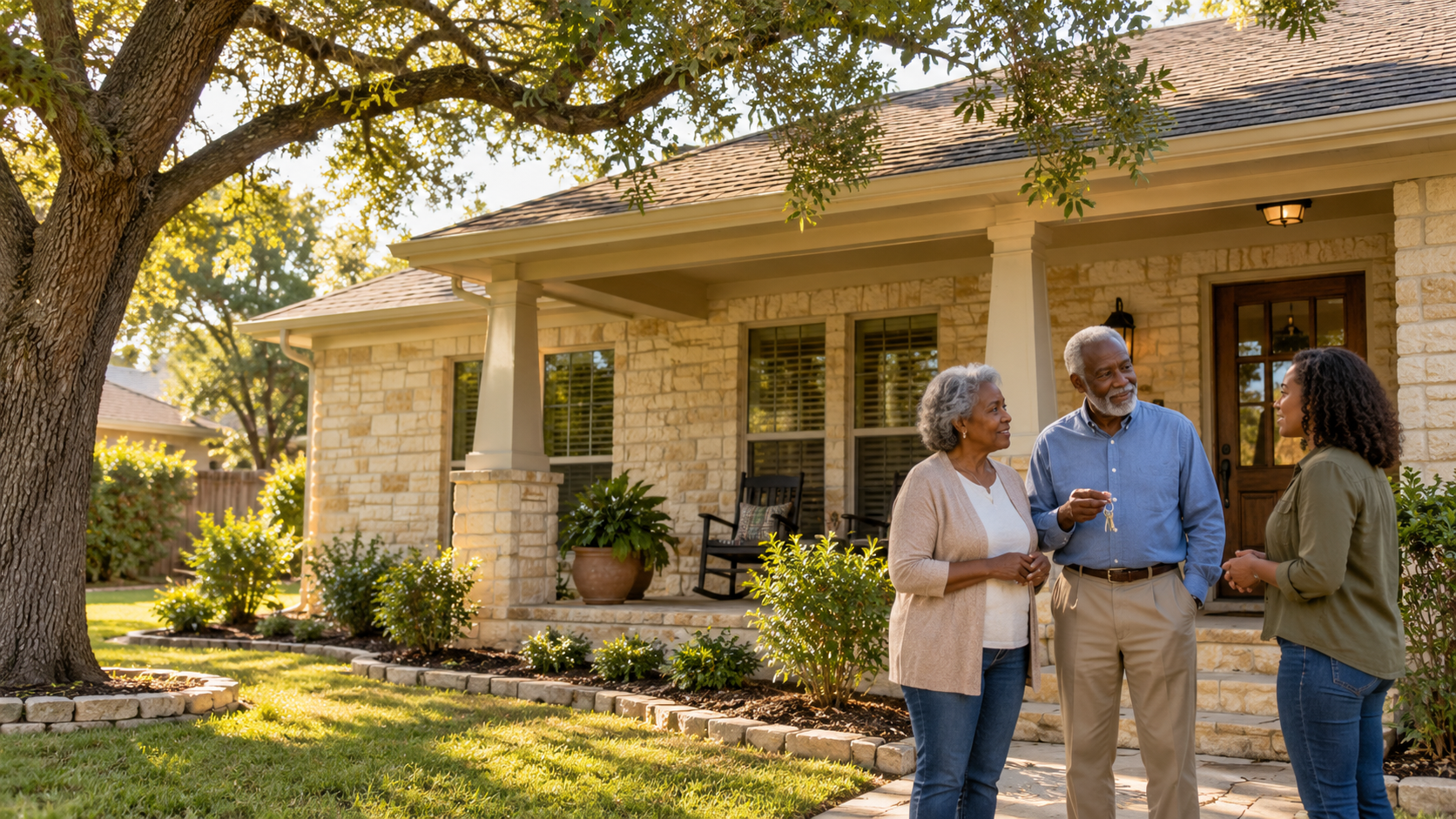
Your home may be the most valuable asset you own. You’ve paid the mortgage, maintained the property, and perhaps lived there for decades. Naturally, you’d like your children or other loved ones to receive it without unnecessary legal expense after your death.
One question I frequently hear is, “Can’t I just put my children’s names on the deed?”
You can, but that may create problems you never intended.
Texas law provides several ways to transfer a home without going through probate. Some allow you to keep control of the property during your lifetime. Others may give someone else ownership rights immediately.
Understanding the difference matters before you sign anything.
Why Would a Home Have to Go Through Probate?
When someone dies owning a home in their individual name, a legal process may be necessary to establish who has authority to transfer it.
Often, that process is probate.
A will can specify who should inherit your house, but a will generally does not eliminate the need for probate. It provides instructions that may need to be carried out through the probate process.
Texas probate is not always especially difficult or expensive. Independent administration, for example, can work efficiently in many cases.
Still, some families would prefer to avoid the court process when transferring the family home. Proper deed planning may accomplish that goal.
Option One: A Transfer on Death Deed
Texas law expressly authorizes a Transfer on Death Deed, often called a TODD.
This deed allows you to name one or more beneficiaries who will receive your ownership interest in real estate when you die.
The important distinction is that the beneficiary receives no ownership interest simply because you sign the deed.
During your lifetime, you retain the right to:
- Continue living in the home.
- Sell the property.
- Mortgage or refinance it.
- Change the beneficiary.
- Revoke the deed.
A properly executed and recorded Transfer on Death Deed allows the designated beneficiary to receive the property outside probate, subject to applicable legal requirements.
However, the deed must meet specific requirements. Among other things, it must be signed, notarized, and recorded in the county where the property is located before the owner’s death.
There is another limitation worth understanding: a Transfer on Death Deed cannot be created for you by someone acting under a power of attorney.
If you lose the necessary legal capacity before completing the deed, this option may no longer be available.
Option Two: A Lady Bird Deed
Another option available in Texas is commonly called a Lady Bird Deed, or an Enhanced Life Estate Deed.
Like a Transfer on Death Deed, it can allow your home to pass to a named beneficiary without probate while preserving substantial control during your lifetime.
With a properly drafted Lady Bird Deed, you generally retain the ability to sell, mortgage, or otherwise dispose of the property without needing the beneficiary’s permission.
The two deeds operate under different legal rules.
Transfer on Death Deeds are governed by Chapter 114 of the Texas Estates Code. Lady Bird Deeds developed under Texas common law.
Their differences can matter, particularly when addressing future changes, substitute beneficiaries, and the precise ownership interests being transferred.
Neither deed is automatically better for every homeowner.
Why Not Simply Add Your Child to the Deed?
Suppose Mary, a 72-year-old Texas widow, owns her home outright.
She has two adult children, David and Susan. Mary wants them to inherit the property equally after her death, preferably without probate.
A friend suggests that she simply sign a deed adding both children’s names to the property.
That sounds easy.
But an ordinary deed transferring ownership interests to David and Susan today could create immediate consequences.
Depending on how the deed is written, Mary might no longer have complete control over the property. Selling or refinancing could require her children’s cooperation.
Their financial difficulties, creditor problems, or marital circumstances might also affect their interests in the home.
There could be gift-tax reporting issues and unfavorable income-tax consequences compared with transferring property at death.
Mary’s goal is to leave the home to her children later, not to make them current owners.
A Transfer on Death Deed or Lady Bird Deed might better accomplish that goal, assuming the facts support it.
What If One of the Children Dies First?
This is an important question that homeowners sometimes overlook.
Suppose Mary names David and Susan to receive equal interests in her home.
What happens if David dies before Mary?
Does David’s share go to his children? Does Susan receive the entire property? Does the result depend on the type of deed?
The answer depends on the deed’s language and applicable Texas law.
Transfer on Death Deeds can address alternate beneficiaries, but beneficiary survival requirements and the effect of multiple beneficiaries must be considered.
Lady Bird Deeds require particular care because the legal treatment of beneficiary interests and substitute beneficiaries differs from a statutory Transfer on Death Deed.
Naming beneficiaries is only part of the planning. You also need to consider what happens if the original plan cannot be carried out.
Married Homeowners Have Additional Questions
Not every Texas homeowner owns the entire property individually.
Texas is a community-property state. A home acquired during marriage may be community property even when only one spouse’s name appears on the deed.
Conversely, property acquired before marriage, or received by gift or inheritance, may be separate property.
Homestead protections and surviving-spouse rights may also affect the situation.
Before preparing a deed, it is important to establish what each owner actually owns and what rights may exist in the property.
For remarried couples and blended families, those questions become especially significant.
A husband may want his surviving wife to remain in the home while ultimately preserving the property for children from an earlier marriage. A simple deed naming the children may not accomplish both objectives.
In some situations, a trust or another arrangement may be more suitable.
Does Avoiding Probate Mean Avoiding All Claims?
No.
A deed that transfers property outside probate does not necessarily protect the home against every creditor, mortgage, lien, or other legal obligation.
For example, a beneficiary receiving property through a Transfer on Death Deed generally takes it subject to existing mortgages and other valid encumbrances.
Under certain circumstances, the property may also remain subject to claims involving the deceased owner’s estate.
Medicaid Estate Recovery Program considerations can also affect planning decisions. Properly structured nonprobate transfers may offer advantages, but eligibility, existing claims, and the applicable rules must be examined rather than assumed.
Avoiding probate and protecting an asset against claims are two different legal questions.
A Deed Is Only One Part of Your Estate Plan
A deed can help determine who receives your home after your death. It does not, by itself, address everything that might happen before then.
What if you develop dementia or suffer a stroke?
Who can manage your finances, deal with the mortgage company, or handle property matters if you are unable to act?
Financial powers of attorney, medical planning documents, and sometimes trusts address different concerns.
You should also consider how the home fits with the rest of your estate. Retirement accounts, life insurance policies, and accounts with beneficiary designations may pass independently of your will.
An effective plan coordinates these arrangements rather than treating each document separately.
Before You Sign a Deed, Review These Five Things
If your goal is to help your family avoid probate on your home, begin with five questions:
- Who legally owns the property? Look beyond whose name appears on a tax statement. Review the deed and any separate- or community-property issues.
- Who should receive the home? Consider your spouse, children, other intended beneficiaries, and what happens if someone dies first.
- Do you need to retain full control? Think about future selling, refinancing, moving, or changing your plans.
- Are there mortgages or other claims? Understand which obligations may remain attached to the property.
- Does the deed work with your existing estate plan? Review your will, trust, powers of attorney, and other beneficiary arrangements.
A correctly prepared deed may provide a relatively simple solution. But simplicity should come from selecting the right legal tool, not from overlooking important details.
The Right Deed Depends on Your Circumstances
If you want your Texas home to pass to your family without probate, you have options.
A Transfer on Death Deed may work well for one homeowner. A Lady Bird Deed may be preferable for another. For families with complicated ownership, blended-family concerns, or special beneficiary needs, a trust may provide a better solution.
The place to begin is not with a blank deed form. It is with a review of how your property is owned, who should receive it, and what you want to accomplish.
Harvey L. Cox, Texas Estate Planning Attorney, helps Texas families address these questions through practical estate and asset-protection planning. With more than thirty-five years in practice, he works with clients to select arrangements that fit their particular circumstances.
This article provides general information about Texas law and is not legal advice for any particular property or family situation.